Executive summary
Australia has almost one million registered caravans, campervans and motorhomes travelling the country. These travellers contribute billions of dollars annually to regional economies — yet many towns still view RV tourism through the narrow lens of providing a dump point and a place to park overnight.
The most successful regional destinations understand a different reality. They are not competing to provide free camping. They are competing to create a welcoming visitor experience that encourages travellers to stop, stay, explore and spend.
The difference between a town that becomes a regular overnight stop and one that is simply driven through often comes down to a handful of practical decisions that require modest investment but deliver meaningful economic returns.
Why RV Tourism Matters
Caravan and self-drive travellers represent one of Australia's most valuable visitor segments. Unlike traditional holidaymakers, RV travellers often travel outside school holidays, visit multiple destinations on a single journey, stay one to five nights in regional communities, and spend across numerous local businesses.
Their spending is distributed across supermarkets, bakeries, cafés, wineries, pubs, fuel stations, pharmacies, hardware stores, visitor attractions and local retailers. Importantly, many travel with flexibility. If a town provides an enjoyable experience, they stay longer. If it doesn't, they move on.
Five practical moves
Make It Easy to Stop
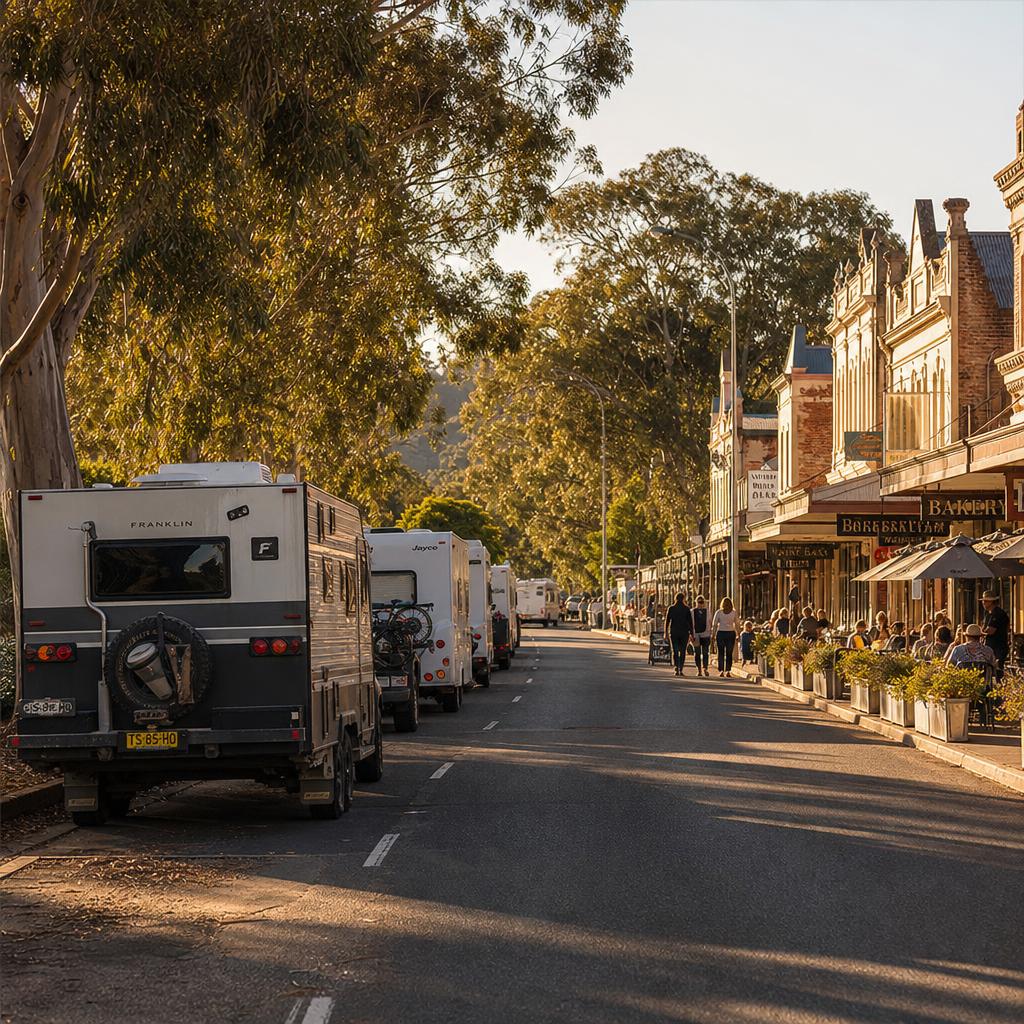
Many towns unknowingly discourage RV visitors before they even arrive — tight parking, confusing signage, low branches, awkward turning circles. The successful destinations remove those barriers with clearly signed caravan parking, drive-through bays, wide turning areas and safe access from major roads.
Locate Facilities Within Walking Distance of Local Businesses
The biggest mistake communities make is placing RV infrastructure well away from the town centre. Convenience drives spending. When visitors can comfortably walk from their vehicle to cafés, wineries, bakeries and attractions, expenditure flows naturally through the community.
Invest in Essential, Not Expensive, Infrastructure
Travellers consistently value simple, well-maintained facilities over expensive infrastructure. Clean public toilets, potable water, a dump point, clear signage, shade, picnic tables, lighting and reliable wayfinding deliver more than any single signature build.
Create Reasons to Stay an Extra Night
The greatest economic opportunity often comes from extending the average length of stay. Winery trails, heritage walks, weekend markets, food experiences, river walks and seasonal festivals each lift the likelihood that visitors choose another night rather than continuing on.
Think Like the Visitor
Successful towns assess the experience from the perspective of someone arriving in a large caravan. Can I find parking? Turn around safely? Access water? Empty my tanks? Walk to shops? Feel welcome? Small frustrations accumulate quickly — and small improvements create lasting impressions.
"The objective is not simply to provide parking. The objective is to increase local economic activity."
Lessons from Regional Australia
Across Australia, successful destinations share common characteristics — practical infrastructure, walkable town centres, and authentic local experiences worth travelling for.
Langhorne Creek
Simple visitor infrastructure combined with exceptional cellar door experiences supports wineries, hospitality and the local general store.
Warrnambool
Strong investment in visitor experiences, coastal attractions and regional events positions the city as both a destination and a gateway.
Coober Pedy
A unique visitor experience supported by RV facilities has helped diversify the local economy well beyond mining.
William Creek
Despite its tiny population, strategic positioning on the Oodnadatta Track and Lake Eyre flights make it an internationally recognised stop.
Daly Waters
The Daly Waters Pub shows how memorable experiences and authentic storytelling can transform a remote location into a destination people seek out.
The Economic Opportunity
Consider a town that attracts an additional ten RVs each day. If each travelling party spends an average of $250 during an overnight stay, the result is meaningful for a regional economy:
Daily visitor expenditure
$2,500
Annual visitor expenditure
$900,000+
For many regional communities, this represents a significant injection into the local economy without attracting large-scale development. The focus shifts from attracting more people to encouraging existing visitors to stay longer and spend locally.
Key Takeaways for Councils
An RV-friendly town is not defined by a dump point. It is defined by the complete visitor experience. The communities achieving the greatest success understand that caravan travellers are not simply looking for somewhere to sleep — they are looking for welcoming places where they can relax, explore, support local businesses and feel connected to the community.
The most successful RV-friendly towns are not necessarily those that spend the most. They are the ones that make it easiest for visitors to stop, stay, and become advocates who recommend the destination to thousands of other travellers.