Executive summary
For many regional councils, tourism planning still revolves around school holidays and the summer peak. Yet one of Australia's most valuable visitor segments follows a very different calendar.
Grey nomads and long-distance caravan travellers are not constrained by school terms or annual leave. They travel when the weather is comfortable, roads are accessible and destinations are less crowded — delivering economic activity precisely when many regional businesses need it most.
That makes the RV market more than a tourism opportunity. It is an economic resilience strategy.
A different type of visitor
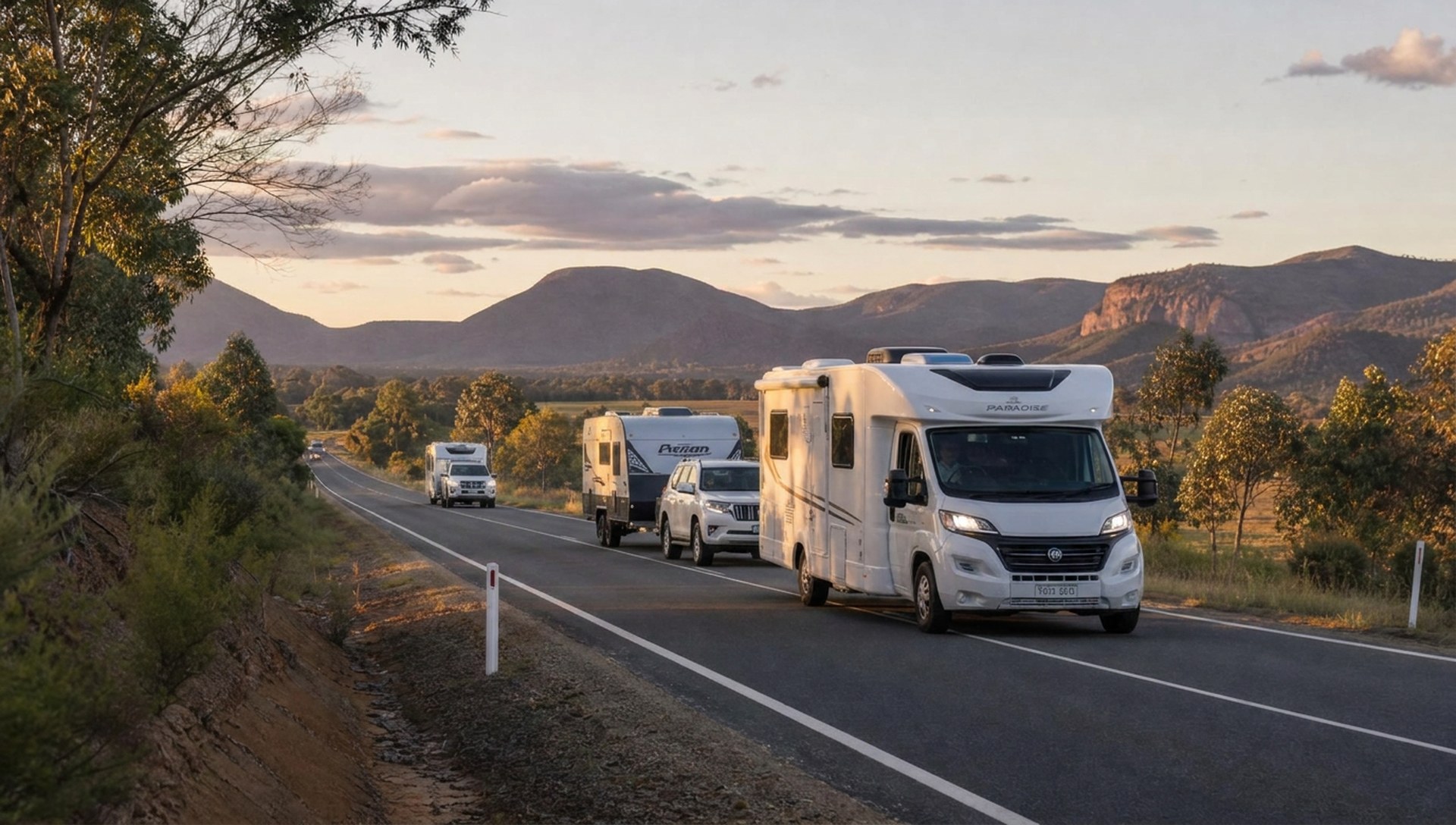
The modern grey nomad is typically aged 55 and over, travelling in a caravan, fifth wheeler, camper trailer or motorhome. They are often retired or semi-retired, financially secure, travelling for weeks or months rather than days, and flexible in route and timing.
Unlike traditional holidaymakers, they are not rushing to a destination. The journey itself is the experience.
That flexibility creates significant opportunities for any regional community willing to provide a welcoming environment.
Understanding the seasonal flow
Australia's caravan movement follows predictable climate patterns. Understanding where travellers are — and when — is the foundation of any serious visitor economy strategy.
Summer
Dec – Feb
Northern Australia quiets in the wet. Grey nomads cluster across southern coasts and inland regions, or pause travel altogether.
Autumn
Mar – May
One of the strongest RV travel periods. Comfortable temperatures drive movement across SA, Victoria, NSW and inland Queensland — wine regions and coastal towns benefit most.
Winter
Jun – Aug
The great northern migration: NT, Kimberley, Pilbara, Coral Coast, tropical Queensland. Communities along these routes see significant visitor spending lifts.
Spring
Sep – Nov
Movement shifts south again through inland Australia. Another strong shoulder season as travellers move slowly back toward home.
What councils get wrong
Many regional tourism strategies still prioritise the peak season calendar. This approach overlooks the economic value of shoulder season visitors — travellers who stay longer, spend consistently, travel midweek, visit outside school holidays and support businesses during quieter trading periods.
For cafés, bakeries, wineries, fuel stations and retailers, these visitors can provide stable revenue when traditional tourism declines.
The shoulder season opportunity
Shoulder seasons offer several advantages. Accommodation is more available. Roads are less congested. Visitor experiences are more relaxed. Local businesses have greater capacity. And most importantly, RV travellers have time.
Rather than rushing between destinations, shoulder-season RV visitors are more likely to:
- —Visit local attractions
- —Join guided tours
- —Attend farmers markets
- —Explore museums
- —Dine locally
- —Purchase regional produce
- —Stay an additional night
Every extra day increases local economic activity.
Understanding the spend pattern
A typical travelling couple might spend across these categories each day:
| Category | Typical daily spend |
|---|---|
| Fuel | $80 – $180 |
| Groceries | $40 – $80 |
| Café or bakery | $20 – $40 |
| Restaurant or pub | $40 – $100 |
| Attractions | $20 – $80 |
| Wine or local produce | $30 – $150 |
| Miscellaneous retail | $20 – $60 |
Daily party spend
$250 – $500
Spread across
7+ local businesses
Importantly, this spending is distributed across numerous local businesses rather than concentrated in a single attraction.
The importance of longer stays
A visitor who stays for two nights contributes far more than one who simply drives through. Longer stays generate additional meals, more retail purchases, higher fuel sales, repeat visits to wineries and greater participation in local experiences.
Councils should focus on increasing length of stay, not simply visitor numbers.
Lessons from regional Australia
Langhorne Creek
Walkable cellar doors, practical RV facilities and a welcoming atmosphere encourage overnight stays that support wineries and hospitality.
Warrnambool
Both a destination and a gateway — encouraging travellers to explore the wider Great Ocean Road region while supporting local accommodation and retail.
William Creek
Demonstrates how a tiny community can capture significant visitor expenditure through strategic positioning and essential infrastructure.
Daly Waters
Shows that authentic experiences create powerful word-of-mouth marketing and repeat visitation across decades.
Five actions councils can take
- 01Treat shoulder season as a primary tourism season, not an off season.
- 02Develop events specifically designed for autumn and spring travellers.
- 03Ensure visitor infrastructure remains operational throughout the year.
- 04Promote local experiences that encourage overnight stays.
- 05Measure success using visitor spending and length of stay, not visitor numbers alone.
Measuring success
Councils should monitor average length of stay, visitor expenditure, caravan park occupancy, main street retail activity, hospitality revenue, visitor satisfaction, online reviews and repeat visitation. These measures provide a more meaningful picture of economic performance than raw visitation figures.
Looking ahead
Australia's RV market continues to evolve. Travellers are staying on the road longer, working remotely, travelling more frequently outside peak periods and seeking authentic regional experiences.
The greatest opportunity is not necessarily attracting more visitors. It is encouraging existing visitors to stay longer, spend locally and leave as enthusiastic ambassadors for the community.
Conclusion
The grey nomad economy does not arrive in one concentrated wave. It moves with the seasons, following comfortable weather, memorable experiences and welcoming communities.
The question is no longer whether grey nomads matter. The question is whether your community is ready to capture a greater share of their journey.