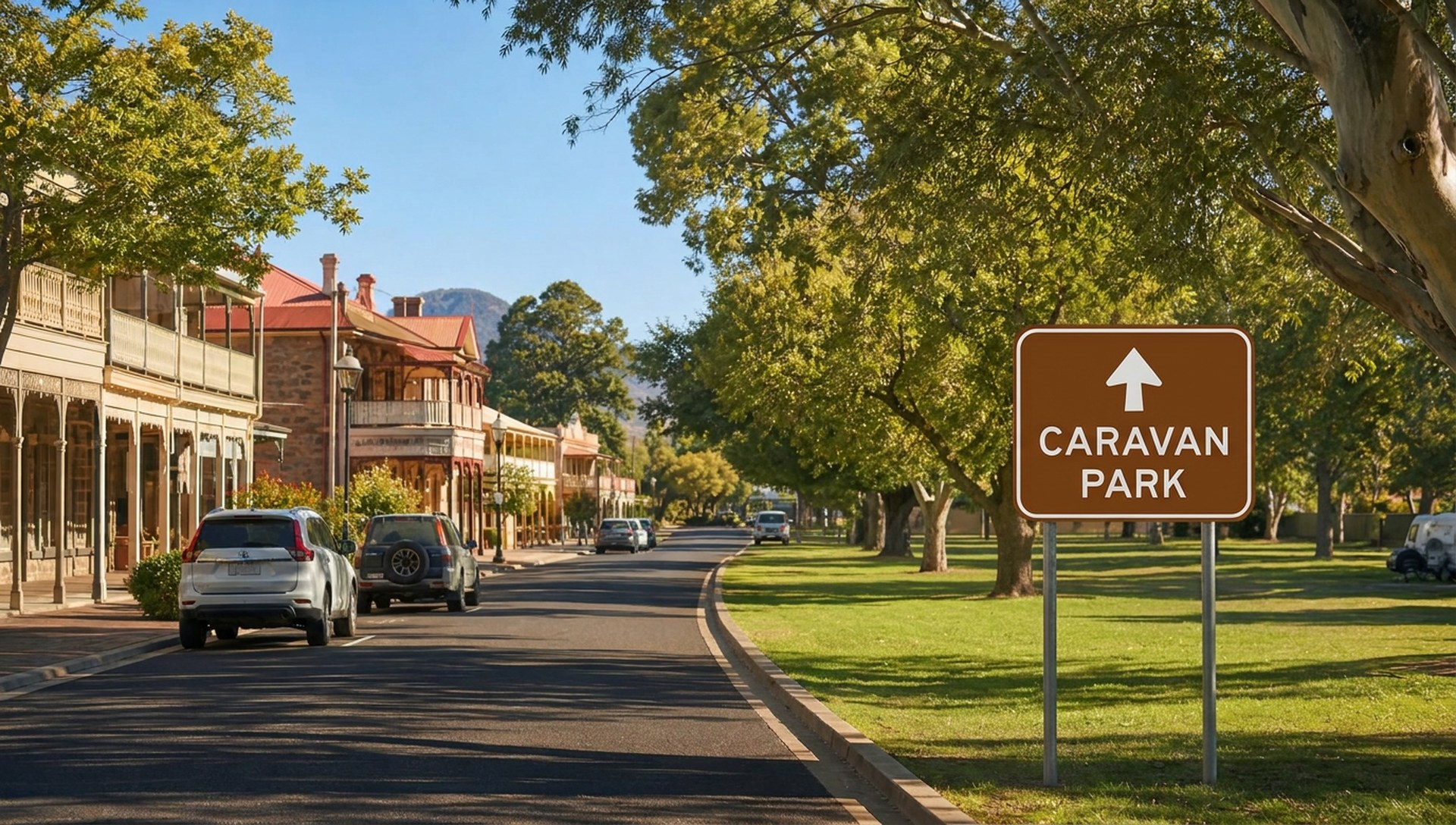
Executive summary
Few issues create more debate in regional tourism than free camping. For many councils, the discussion quickly becomes polarised. Caravan park operators fear lost business, travellers advocate for more low-cost overnight options, and councils are left trying to satisfy competing interests while supporting local economic development.
Unfortunately, this is the wrong conversation. The real question is not whether communities should support free camping or protect caravan parks.
The real question is how a regional destination maximises visitor spending, extends length of stay and strengthens the entire visitor economy.
The most successful regional destinations no longer see free overnight stays and commercial caravan parks as competing products. They recognise that each serves different visitor needs and that together they can increase total visitor expenditure. The objective is not to redistribute visitors — it is to grow the market.
Moving beyond the false choice
Across Australia, the phrase "free camp versus caravan park" has become embedded in public debate. It suggests that every traveller choosing a free overnight stop represents a direct financial loss for a commercial operator. In practice, visitor behaviour is far more complex.
Caravan travellers are not a single market. They have different travel styles, budgets, trip durations and accommodation preferences. Some seek premium holiday parks with resort-style facilities. Others simply require a safe overnight stop. Many use both during the same trip. A regional tourism strategy should recognise this diversity rather than force travellers into a single accommodation model.
Understanding traveller behaviour
A typical grey nomad travelling for several months might spend three nights in a commercial caravan park, one night in a free 24 hour precinct, book a powered site to service laundry and tanks, stay at a donation campground and choose a national park campground later in the same week.
These decisions are influenced by weather, distance and facilities. They are not ideological choices. They are practical ones.
The economic question
Councils should ask "where does visitor spending occur?" — not "where did visitors sleep?"
Accommodation is only one component of the visitor economy. Regional travellers also purchase fuel, groceries, coffee, bakery products, restaurant meals, local produce, wine, hardware, pharmacy items, vehicle servicing, attractions and tours. Much of this spending occurs regardless of whether the visitor stayed in a free precinct or a commercial caravan park.
The economic objective should therefore be increasing total visitor expenditure rather than maximising one accommodation category.
Caravan parks
Essential tourism businesses. Councils should support them as partners.
- —Powered sites and amenities
- —Camp kitchens and laundry
- —Family facilities and pools
- —Cabin and long-stay options
- —Local employment
- —Private investment in tourism
Free overnight stays
A different purpose: the introduction to a destination, not a substitute for it.
- —Reduce driver fatigue
- —Encourage stopovers in passing towns
- —Introduce travellers to communities
- —Support self-contained vehicles
- —Provide flexibility on long journeys
- —Increase visitation from travellers who would otherwise bypass
Many visitors who initially stop for one free night later return for longer stays in caravan parks after discovering the destination. The free stay becomes the introduction, not the substitute.
The visitor journey
Think of visitor accommodation as a progression. Every stage supports additional local spending.
01 · Arrive
A traveller notices a welcoming 24 hour RV precinct and decides to stop.
02 · Explore
They walk into town, sample cafés, talk with locals and pick up a walking map.
03 · Discover
They find wineries, walking trails, events or attractions worth more than one day.
04 · Stay & return
They book into the local caravan park, extend their stay — and recommend the destination to friends.
Lessons from regional Australia
Langhorne Creek, SA
Visitors often begin with a simple overnight stay but remain longer because of exceptional wineries, walkable experiences and welcoming hospitality.
William Creek, SA
Travellers arrive because of location and practical facilities. Many extend their stay after discovering scenic flights, history and the unique outback atmosphere.
Daly Waters, NT
The pub itself has become a destination. Accommodation options complement rather than compete with the visitor experience.
Warrnambool, VIC
Commercial accommodation, public infrastructure and major attractions work together to support one of regional Victoria's strongest visitor economies.
Building partnerships
Councils can strengthen relationships with caravan park operators in practical ways. When the focus shifts from accommodation to economic development, collaboration becomes much easier.
- —Consult early during planning
- —Share visitor data
- —Jointly promote local attractions
- —Develop visitor itineraries
- —Encourage extended stays
- —Coordinate events
- —Support regional marketing
Measuring success
Rather than asking "how many people used the free camp?" councils should ask whether visitors stayed longer, whether local businesses reported increased spending, whether caravan parks maintained or increased occupancy, whether visitor satisfaction was high, and whether repeat visitation increased. These measures reflect the health of the entire visitor economy.
A strategic framework
Regional accommodation should be viewed as an integrated system — caravan parks, holiday parks, hotels, motels, farm stays, national park campgrounds, donation campgrounds, free overnight precincts and short-stay RV areas. Each serves a different market; together they strengthen destination competitiveness.
Five recommendations for councils
- 01
Replace the free camp versus caravan park debate with a visitor economy strategy.
Reframe the question from where visitors sleep to where visitor spending occurs.
- 02
Engage caravan park operators as strategic partners.
Consult early, share visitor data and coordinate marketing.
- 03
Design free overnight areas to encourage visitors into town.
Walkability and orientation matter more than parking capacity.
- 04
Measure visitor spending, not accommodation choice.
Track expenditure, length of stay, repeat visitation and business confidence.
- 05
Promote accommodation diversity as a competitive advantage.
Different visitor segments require different products — and they spend in different places.
Looking ahead
Australia's caravan and RV market continues to expand. Communities that embrace a balanced accommodation strategy will be better positioned to attract visitors, encourage longer stays and strengthen local businesses. Those that continue framing the discussion as a competition between accommodation providers risk missing the broader economic opportunity.
The future belongs to destinations that work together.
Conclusion
Regional tourism is not a zero-sum game. Every visitor who chooses to stop, explore and spend contributes to the local economy. Caravan parks are an essential part of that economy. So too are well-planned overnight RV precincts.
The most successful communities understand that the objective is not to determine where visitors sleep. It is to create compelling destinations where visitors choose to stay longer, spend more and return again. When councils, caravan park operators and local businesses work together, everybody benefits.