Executive summary
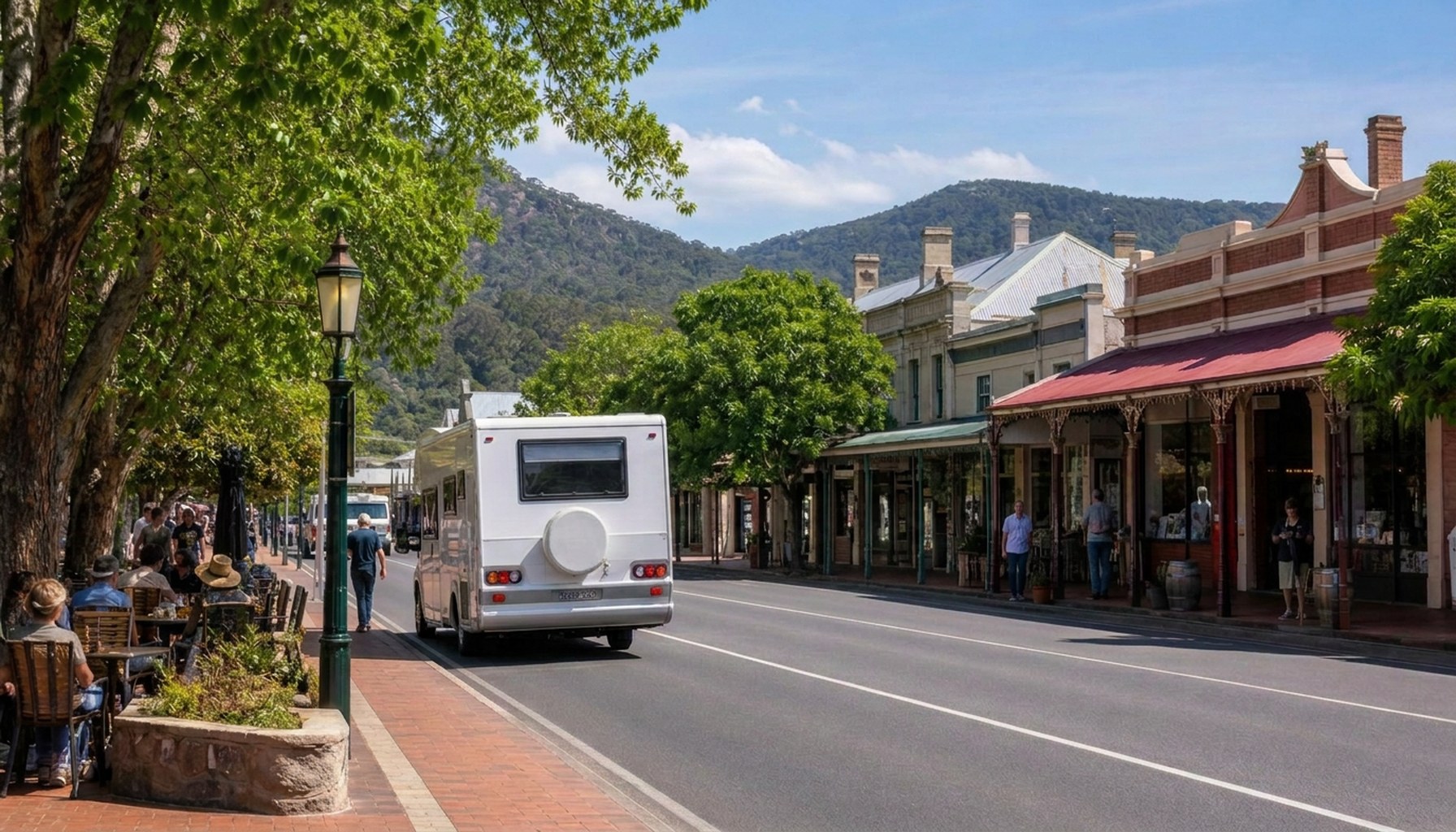
More than 800,000 registered recreational vehicles now move around Australia each year. The market is bigger, younger, more diverse and more digitally connected than most regional tourism strategies assume.
Communities that still imagine a single retired couple in a white caravan are planning for a market that no longer exists in isolation. The reality is a layered audience — retirees, pre-retirees, families, remote workers and weekend explorers — each with different needs, different spending habits and different reasons to stay another night.
The opportunity is no longer to attract the grey nomad. It is to design a destination that the whole self-drive market wants to choose.
A market in numbers
Registered RVs
800,000+
Caravans, motorhomes and campervans on Australian roads — and growing each year.
Annual contribution
$8B+
Estimated direct expenditure by the caravan and camping sector into the Australian economy.
Spend in region
60%
Share of typical RV traveller expenditure that lands in regional and rural communities.
Average trip length
21 nights
Modern self-drive travellers stay longer than almost any other domestic visitor segment.
Five travellers, one market
The modern Australian RV market is not one segment but five — each with distinct needs, behaviours and spending patterns. Recognising them is the first step toward a destination strategy that actually works.
The Established Grey Nomad
Age 60–75
Retired or semi-retired. Travels 3–6 months a year. Values amenities, safety, social connection and a walkable main street. Spends consistently on groceries, fuel, cafés, attractions and local services.
The Active Pre-Retiree
Age 50–65
Still working but increasingly mobile. Higher discretionary spend on wineries, dining, experiences and tours. Often travelling in higher-spec rigs and seeking quality over volume.
The Young Family
Age 30–45
School holidays and longer breaks. Looks for safe parks, playgrounds, beaches, family-friendly cafés and activities. Drives shoulder-season and summer demand.
The Remote-Working Nomad
Age 25–45
Working from the road. Needs reliable connectivity, good coffee and a place to plug in. Stays longer in towns that offer all three. The fastest-growing segment.
The Weekend Explorer
Age All ages
Short trips from a metropolitan base. High frequency, high spend per night, low tolerance for poor amenity. Often the gateway segment for future longer trips.
The fastest-growing segment of the Australian RV market is not retired. It is working — from the road, with a laptop, a flat white and an unreliable signal.
Five ways regions still misread the market
- 01
Treating RV travellers as a single market.
There is no average grey nomad. Strategies built for one segment ignore the spend of the other four.
- 02
Equating low overnight cost with low spend.
A traveller paying nothing for an overnight stay can still spend hundreds in a day at local businesses.
- 03
Measuring vehicle counts instead of dwell time.
The economic value is in length of stay and on-the-ground expenditure — not transient through-traffic.
- 04
Ignoring connectivity, coffee and amenity.
Younger and remote-working segments choose destinations on Wi-Fi quality and café culture, not signage.
- 05
Marketing only to retirees.
The market has diversified. So should the message, the channels and the visitor experience.
The decision-making journey
Today’s RV traveller follows a recognisable path from inspiration to advocacy. Each stage is an opportunity for a destination to be considered, chosen and recommended.
- 01
Inspiration
Social media, word of mouth, travel media and apps shape the consideration set long before a trip begins.
- 02
Research
Travellers cross-check route apps, council websites, traveller forums and Google reviews — your digital shopfront matters.
- 03
Routing
Decisions are made in real time on the road based on distance, weather, fuel and overnight options.
- 04
Arrival
The first 15 minutes of a stop — signage, parking ease, amenity, welcome — sets whether they stay one night or three.
- 05
Spend & advocacy
What they spend in town, and what they post online, shapes the next traveller's decision.
What they actually want from your town
Across every segment, the answer is consistent. Travellers do not want spectacle. They want competence, hospitality and a reason to stay another night.
- —Clear, current information online before they leave home
- —Easy entry, easy exit and obvious parking on arrival
- —Clean amenities and reliable potable water
- —Walkable access from where they park to where they spend
- —Good coffee, fresh food and a welcoming local trader
- —Mobile coverage strong enough to work and stream
- —A genuine reason to stay a second night
What this means for councils
A modern RV tourism strategy treats the 800,000-strong market as a layered, evolving audience. It plans for the retiree and the remote worker. It invests in the digital shopfront as seriously as the physical one. It measures dwell time, spend and repeat visitation — not just vehicle counts.
Above all, it recognises that the destinations winning today are the ones designing for the traveller of tomorrow.
Conclusion
Australia’s self-drive tourism market has quietly become one of the most valuable, resilient and diverse visitor segments in the country. The regions that read it correctly will capture an outsized share of growth. The regions that keep planning for a market that no longer exists will be left wondering why traffic is up but spend is flat.
The grey nomad is alive and well. They’re just no longer travelling alone.